
Newt Gingrich Really, Really, Really Doesn't Want To Be Virginia's Senator So Stop Asking
Jason Linkins
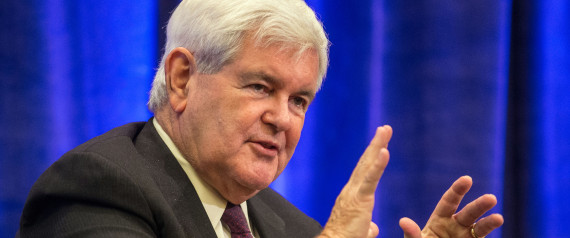 Newt Gingrich does not want to run for Senate in Virginia. And I mean he really, really
doesn't want to. And so he'd really like the people who are trying to
get him to run for Senate in Virginia to pack it in and stop talking
about it -- so much so that the lawyers are now involved. Per The Washington Post's Aaron Blake:
Newt Gingrich does not want to run for Senate in Virginia. And I mean he really, really
doesn't want to. And so he'd really like the people who are trying to
get him to run for Senate in Virginia to pack it in and stop talking
about it -- so much so that the lawyers are now involved. Per The Washington Post's Aaron Blake:A lawyer for Newt Gingrich is asking supporters attempting to draft the former speaker into the 2014 Virginia Senate race to "cease and desist" from using his likeness in its efforts. The lawyer also says Gingrich (R) will not run for Senate next year or at any point in the future.At issue here is a days-old "Draft Newt" political action committee launched by a former Gingrich staffer named Andrew Hemingway, who formerly served the 2012 presidential aspirant as his New Hampshire state director and digital fundraising director. As The Hill reported last week, Hemingway said in a statement, "We want a credible challenger to Mark Warner, and no one could do what Newt could do to fight -- and win ... U.S. Senator Newt Gingrich would be an immediate game-changer, giving conservatives another voice that would take the fight to the Obama administration." According to reports, the PAC had obtained over 10,000 signatures in support.
Of course, Gingrich has "left the door open" to another run at the White House. Actually, it would be more fair to say that in the past two decades, he's failed to even install a door between himself and "runs at the White House." It's just that last year he finally decided to go through with it, ending up defeated and in debt. Now, he's making the easiest money of his long career as a seat-filler who occasionally speaks on CNN's Crossfire, and in all likelihood, he is bound by a contract to not run for office while he's pocketing Jeff Zucker's funbucks.
So Gingrich's lawyer, Stefan C. Passantino, would like all of these "Draft Newt" shenanigans to end with all deliberate haste, telling the group: "Accordingly, we hereby demand that you cease and desist from the unauthorized use of Speaker Gingrich's name or likeness and that you further cease and desist from any activity implying or insinuating that your group is in any way authorized by, or affiliated with, Speaker Gingrich or his organizations."
Right now, the GOP lacks what would ordinarily be considered a "credible challenger" to Senator Mark Warner (D-Va.). Polls conducted in July by Public Policy Polling had Warner up double digits on the skylark potential candidates that could get in the race, including Virginia Lt. Gov. Bill Bolling, Virginia Rep. Eric Cantor, Virginia Gov. Bob McDonnell, and Virginia Attorney General Ken Cuccinelli. Former Virginia Sen. George Allen has said he will not run in 2014.
Gingrich isn't the only name that's been floated as a possible candidate. Back in August, GOP officials were said to be "grumbling" over Liz Cheney's decision to seek a primary battle against the sure-to-be-reelected Wyoming Sen. Mike Enzi, instead of staying closer to home and taking on Warner. I don't know what the Commonwealth of Virginia did to deserve having Liz Cheney and Newt Gingrich wished upon it, but surely being stuck with either Cuccinelli or Terry McAuliffe as the governor next year will fully absolve the Old Dominion of its sins.


